























Blueprint your revenue system like an architect blueprints a house.
See every platform, process, and handoff mapped visually.

The Systems Automation Engagements (SAE) Map reveals how your business actually operates. Most companies can’t answer: “Where does data break between Marketing and Sales?” or “Why do Operations build the wrong thing?” SAE shows you the answer — every system, every workflow, every gap highlighted in one visual map.

System Automation Engagements (SAE)

Visualize how your systems truly connect, revealing where data flows, stalls, or gets lost between teams.

Stop losing deals in the handoff between Sales, Ops, and CS. QDF moves data and triggers actions between systems instantly.

Your sales team closes a deal. Finance doesn’t see it for 3 days. Operations builds the wrong thing. Customer Success never gets the handoff. Quick Data Flow (QDF) fixes this — data flows between systems in real-time, without custom code that breaks when platforms update.

Workflow Automation

Turn every manual process into motion — connect systems, trigger actions, and let automation carry your revenue forward.

When every system tells a different story, nobody can make confident decisions. CDHS unifies CRM, ERP, Finance, and Ops into one real-time data layer and Single Source of Truth.

Your CRM says one thing. ERP says another. Finance is running reports from spreadsheets. Nobody trusts the data. The Centralized Data Hub System (CDHS) is your Single Source of Truth (SSOT) — real-time sync across every platform, governed data, and one unified view that actually works.

CDHS: How it Works?

Bring your data together in one place. It’s built to sync in real-time, link, and deliver insights you can use tomorrow.

Pre-built campaign automation kits, deploy customer engagement workflows without custom development.

Automation Campaigns Creator (ACC) provides pre-built engagement workflow kits designed to address specific areas of revenue leakage. Each ACC KIT includes campaign architecture, automation sequences, and multi-channel touchpoints — ready to deploy without custom development.

Automation Campaigns Creator (ACC)

Transform your Customer Engagement Journey with ACCs’ KITs intuitive automation tools.

Capture Decisions, Assign Tasks, and Keep Work Moving Without Manual Follow-Ups

Teams leave meetings with good intentions, but follow-through breaks down. Notes scatter across Slack. Action items disappear into documents. TALK-to-TASKS closes the execution gap — turn meeting recordings into correctly routed tasks automatically.

How TALK-to-TASKS Works?

Routing conversations from meetings with two clicks into the right place to the right person on your Project Tool.

Data Flow Architecture Design

Built from your SAE Map, we design workflows that connect systems and trigger the right actions at the right time.

Integration Path Selection

We choose the optimal path—native connectors, APIs, iPaaS (Make, Workato), or N8N—for reliable, scalable data flow.

Team Training & Documentation

We onboard your team, document workflows, and ensure everyone knows how the system works.

We design and build QDFs that move data and trigger actions across your systems in real-time.

You need workflows that don’t break when platforms update. We implement Quick Data Flows using your SAE Map as the blueprint—connecting CRM, ERP, operations, and finance so every action flows automatically without custom code that breaks on the next update.

CDHS Architecture Design

Built from your SAE Map, we design the central hub that connects all systems and establishes your single source of truth.

Master Data Management (MDM)

We establish control and accuracy across every record, ensuring clean, consistent, reliable data everywhere.

Data Governance & Flow Rules

We define ownership, validation rules, and automated flow logic to keep your data clean as it scales.

We implement CDHS so every system, report, and decision runs from one source of truth.

When CRM, ERP, Finance, and Operations all tell different stories, nobody can make confident decisions. We build your Centralized Data Hub System using your SAE Map to define data ownership, flow rules, and governance—so you finally have one real-time view that everyone trusts.

Campaign Strategy & Journey Mapping

We map your customer journey, identify engagement gaps, and design campaigns that address specific revenue leakage points.

Multi-Channel Workflow Design

We design coordinated workflows across email, SMS, in-app messaging, and sales triggers for unified engagement.

Campaign Launch & Optimization

We build, test, launch, and continuously optimize your campaigns for maximum conversion and engagement.

We design and deploy multi-channel engagement campaigns using ACC templates—customized for your customer journey.

Generic email sequences don’t work. We build Automation Campaign Creator (ACC) workflows tailored to your specific revenue leakage points—combining email, SMS, in-app, and sales triggers across HubSpot, Klaviyo, and your CRM to drive engagement that converts.

Integration Architecture & Path Design

Selecting the optimal path for seamless, scalable data flow across Departments.

Custom Implementation & Config

From simple plug-ins to advanced cross-system builds, we tailor each setup to your business logic.

Mastering Seamless Migration & Implementation Systems

Your new tools integrate smoothly, align with your workflows, and start delivering value from day one.

We don't just connect systems, we make them work in harmony. Fruition designs, builds, and implements integrations that keep your operations flowing without friction.

Most integrations are duct-taped APIs that break when platforms update. We design integration architecture for the long term—selecting the optimal path through native connectors, APIs, N8N, or iPaaS like Make or Workato.

15-minute conversation that reveals where your revenue system breaks — gaps, silos, missed handoffs mapped visually.

Most companies can’t answer basic questions: “Where does our sales data break?” “Why doesn’t Operations know what Marketing promised?” The SAE Diagnostic reveals your answer in 15 minutes — a visual map showing exactly where systems disconnect, data gets lost, and revenue leaks.

System Automation Engagements (SAE)

Visualize your business blueprint. See every system, process, and touchpoint in one place.

Stop Revenue Leakage

Find and fix the invisible cracks draining your time, money, and margins — before they turn into growth barriers.

Preventing your Data Silos — Get your SSOT

Centralize scattered data and replace confusion with clarity, ensuring every department works from one truth of data and build your single source of truth (SSOT).

Process Mapping & Documentation

We map how work truly gets done across RevOps, Production, and Operations — turning chaos into structured processes.

SOP Design for Automation Readiness

Every SOP is built with automation in mind, ensuring systems and people work together. Not against each other.

Adoption & Change Enablement

We don't just document; we drive adoption. Teams learn how to follow, improve, and trust the process, turning SOPs into muscle memory.

Transform tribal knowledge into repeatable workflows, giving your teams the structure to scale with clarity and consistency.

Automation breaks and centralization stalls when teams work from memory instead of process. We map how work truly gets done — turning SOPs into muscle memory, not shelfware.

Team Training & Enablement

Hands-on training sessions tailored to your team's roles, ensuring everyone uses new systems confidently from day one.

Adoption Measurement & Optimization

Track adoption metrics, identify blockers, and continuously optimize workflows to ensure your team actually uses what you built.

Gold Partner Implementation Support

We're Gold Partners with HubSpot, Monday.com, and Segment — meaning we bring certified expertise to every implementation.

We don't just hand over systems — we onboard your team, train them to use tools confidently, and ensure adoption sticks.

New systems fail when teams don’t adopt them. We train, enable, and support your team through the transition. As Gold Partners with HubSpot, Monday.com, and Segment, we know how to make systems work for your people.

RevOps Strategy & System Architecture

We align your go-to-market strategy with your tech stack, designing the operational backbone that connects Marketing, Sales, and CS.

Performance & Optimization with Automation Support by AI agent

Our consultants analyze your funnel, uncover hidden inefficiencies, and rebuild your operations for precision, speed, and scalability.

Tech Stack Alignment & Implementation

From HubSpot and NetSuite to Monday.com and Shipwell, we integrate and orchestrate your tech ecosystem into one coordinated revenue engine.

Strategic advisory for revenue operations — system architecture, automation strategy, data governance, and team enablement.

RevOps isn’t just about connecting systems — it’s about aligning strategy, data, and execution. Our consultants bring two decades of experience building revenue engines for $50M-$500M companies.

The LET DATA FLOW™ Framework

Fruition RevOps’ proven framework turns disconnected systems into synchronized revenue engines. Each stage reveals where your data, workflows, and teams fall out of sync, and rebuilds them into one intelligent flow that drives efficiency, visibility, and growth.
Four stages that guarantee smooth process alignment

1

Diagram Your SAE Map

Map how your business actually operates across teams, capturing the customer journey, decision points, system roles, data handoffs, and revenue flow. This blueprint surfaces inefficiencies and defines what must be automated versus redesigned.

2

Map Your Data & Automation Attributes

Translate the SAE blueprint into a concrete data flow and automation model — defining system ownership, data attributes, relationships, and trigger logic. This prepares your foundation before building QDFs.

3

Centralize the Flow (CDHS)

Implement the Centralized Data Hub System as the governance layer connecting all systems and QDFs. CDHS enforces data ownership, flow rules, and establishes a single source of truth — ensuring automation stays stable as you scale.

4

Build & Execute Data Flow (QDF)

Deploy targeted Quick Data Flows that move data and trigger actions across systems in real time. Each QDF handles a specific business event — deal progression, order creation, production updates, billing changes — without manual intervention.

Manufacturing

Sync production schedules, inventory, and order fulfillment across ERP, CRM, and operations.

Healthcare

Connect patient data, billing, and care coordination across EMR, RCM, and operations systems.

Technology

Align product, engineering, sales, and customer success with real-time data across tools.

Consumer Services

Unify ticketing, CRM, and knowledge bases to deliver seamless customer experiences at scale.

Retail

Connect POS, inventory, e-commerce, and fulfillment for real-time visibility across channels.

Franchisors

Centralize franchise operations, royalty tracking, and performance reporting across locations.

Agencies

Sync project management, client billing, and team capacity across tools for better margins.

Investments

Unify portfolio tracking, deal flow, and LP reporting for complete investment oversight.

Meet Our Team

The automation architects, data specialists, and RevOps consultants behind Fruition.

Our History

Two decades transforming disconnected systems into unified revenue engines.

Partner With Fruition

Join our network of agencies and consultants implementing Fruition frameworks.

Our Philosophy

Where technology meets process—aligning Platforms, People, Processes, and Insights.

Resources & Learning

Latest Blog Posts

Stay current with RevOps insights and automation strategies

VideoTube Channel

Watch automation tutorials and implementation guides

Free RevOps Evaluation

Assess your revenue operations maturity

ACC Templates

Pre-built automation campaign kits ready to deploy

Framework Guide

Learn the Let Data Flow methodology step-by-step

Contact Our Team

Talk to automation architects about your systems

Case Studies

Real implementations with measurable results

Tools & Calculators

Revenue Leakage Calculator and diagnostic tools

Start Here Page

Not sure where to begin? We’ll guide you.

Why Data Flow

Most RevOps fixes treat the symptom. This is how we fix the operating model underneath.

Data Leakage Calculator

Find out how much revenue your business is losing and exactly where it’s slipping through the cracks.

Pricing

Every engagement follows a logical journey. Here’s where it starts.

SAE Architecture Map

Find where your revenue is breaking — every engagement starts here. We map your systems, identify leakage points, and show you exactly what to fix first.

Business process automation that delivers the hours it saves.

Most automation fails silently because the data feeding it is broken. We show you how to build business process automation on a foundation where systems actually talk to each other.

What is business process automation?

Business process automation refers to using software to automate repeatable tasks, workflows, and processes across your organization. The goal is simple: eliminate manual work, reduce errors, and let your team focus on strategy instead of spreadsheets.
Most people think of business process automation as just speeding things up. Real automation does something deeper. It standardizes how work flows through your organization, creates a single source of truth, and makes processes predictable and scalable.
There’s a critical threshold most automation projects miss: business process automation only works when the data feeding those processes is clean, consistent, and synchronized across all your systems. When data silos exist, automation amplifies the problem instead of solving it.

Why business process automation projects fail

Teams implement automation tools expecting immediate results. Six months later, they’re fighting data mismatches, duplicate work, and systems that contradict each other. The automation is running. The data isn’t.
This happens because business process automation and data integration are treated as separate projects. You can’t automate a broken process and expect clean results. Business process automation requires a foundation of reliable, flowing data.

Task Automation

Automate individual tasks like sending emails or updating records. Simple and fast to implement, but limited in scope.

Workflow Automation

Chain tasks together in a sequence. More powerful, but still isolated from the broader business process.

Connected Process Automation

Automate entire end-to-end processes with clean data flowing between systems. This is where real business process automation lives.

When business process automation breaks
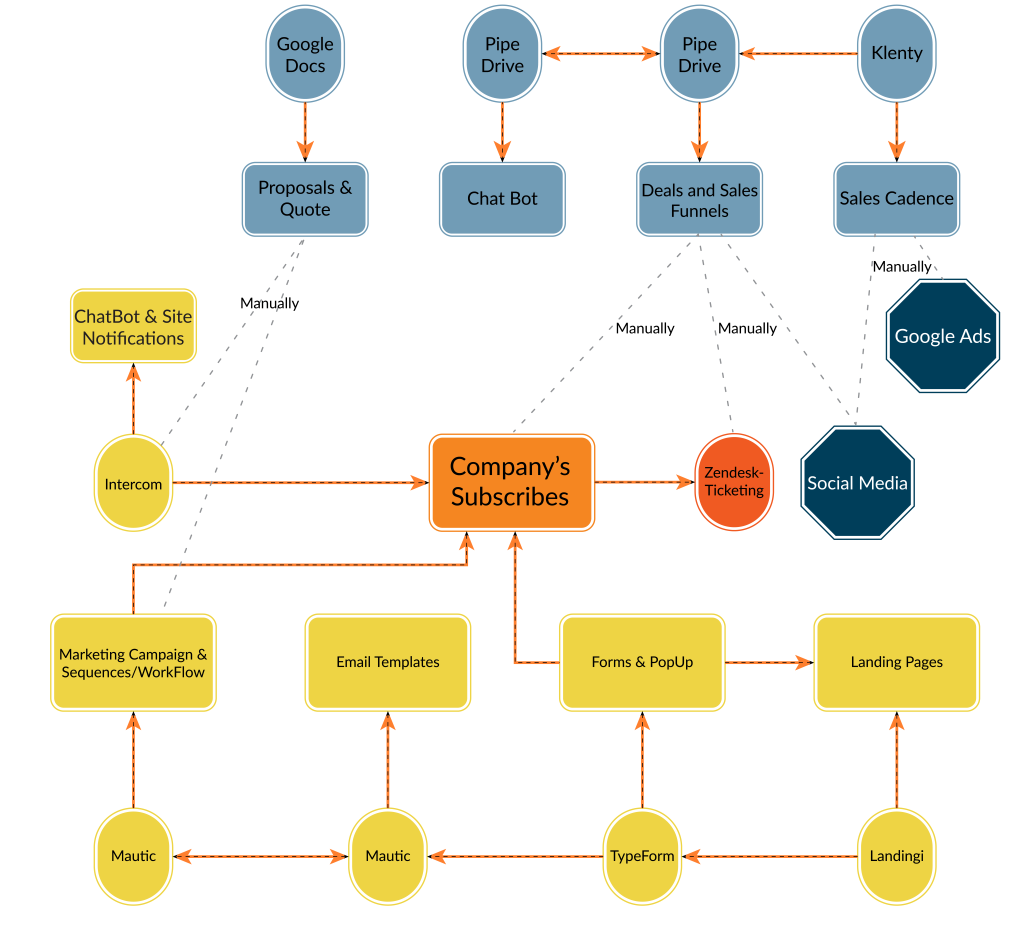
You’ve seen this scenario. A team implements business process automation to save time. For a few weeks, it works. Then data stops syncing. Duplicate records appear. Workflows break silently. Suddenly your team spends more time fixing what automation broke than the original process took.
You pick a business process automation tool and wire up workflows, but data doesn’t sync cleanly. So you add manual handoffs. Now your automation relies on humans watching it work. The alternative: solve the data problem first. Business process automation becomes the layer on top of clean, flowing data. Workflows run without manual oversight.
Every hour your team spends fixing data that should flow automatically is an hour not spent on revenue work. Across a year and across your team, that’s thousands of hours and massive lost productivity. Business process automation only delivers ROI when the data is ready for it.

Business process automation that actually works

Real business process automation automates the entire ecosystem: processes, data, and the connections between systems. When you get this right, three things happen:

Clean data flows everywhere

Updates ripple across all your systems in real time. No manual exports. No duplicate records. No guessing which number is correct.

Automation runs reliably

Business process automation doesn’t break when data is consistent. Workflows execute reliably, without human intervention.

Your team gets their time back

No more copy-pasting. No more chasing down the real number. Work actually feels automated.

How Quick Data Flow enables business process automation

Business process automation needs a nervous system. Quick Data Flow (QDF) is built to automate workflows without breaking the data connections that make them work.
QDF handles the orchestration layer: capturing data once, validating it before it moves, syncing it across your systems in real time, and catching breaks before they cascade through your automation.
This is what separates business process automation that delivers results from automation that creates more work.

Where does your automation stand right now?

Most teams don’t know which processes are truly automated and which ones just look automated. Our SAE Map shows you the gap between your current state and real connected automation.

The real payoff of business process automation

When you implement business process automation the right way, the benefits compound across your entire operation:

Efficiency that scales

Manual processes take longer and break easier. Business process automation standardizes how work moves through your organization. What takes 3 days now takes 6 hours. And it’s the same 6 hours every time.

Fewer errors, better decisions

Humans make mistakes when moving data by hand. Business process automation eliminates that. Clean data means leadership actually trusts the dashboard. That means better decisions, faster.

Your team gets leverage

Business process automation doesn’t replace your team. It frees them from tedious work. Marketers stop chasing lead numbers in five different systems. Sales spends time on deals, not data entry. Operations finally has visibility into what’s actually happening.

Compliance and auditability

When business process automation runs on clean, flowing data, compliance reporting stops being a nightmare. You can prove what happened, when, and why. Non-negotiable for regulated industries.

How to build business process automation that sticks

1

Map your current process

What is the process today? Who touches it? Where does data get stuck or duplicated? You need a clear picture before you automate.

2

Fix the data foundation

Business process automation fails on bad data. Before you automate, make sure data is flowing cleanly between your systems. This is where most teams miss the mark.

3

Design the workflow

What steps need to be automated? What decisions need humans? Map out the business process automation logic before you build.

4

Build and test

Implement business process automation incrementally. Test in parallel with your current process. Make sure data is flowing correctly before you switch over.

5

Monitor and iterate

Business process automation isn’t set-and-forget. Watch for breaks. Adjust workflows as your business evolves.

Common business process automation mistakes

Knowing what not to do is half the battle.

Automating a broken process

You can’t polish a process by running it faster. If your business process automation is inheriting bad data, it will perpetuate bad data faster. Fix the process first.

Ignoring data quality

This is the #1 killer of business process automation projects. Your workflows are only as good as the data feeding them. Without clean, synced data, automation breaks silently.

Implementing without stakeholder alignment

Business process automation changes how work flows. If your team isn’t bought in, they’ll find workarounds. They won’t maintain the data quality business process automation depends on.

Not monitoring the automated flow

Set business process automation and forget about it? That’s how data silos grow back. You need visibility into what’s working, what’s breaking, and where.

Building business process automation on connected data

Most vendors sell business process automation tools. They stop at the workflow layer. They automate tasks without ensuring the data feeding those tasks is clean and connected.
Fruition takes a different approach. We start with your data. We connect it. We synchronize it. Then we layer business process automation on top.

Our business process automation stack

Centralized Data Hub System (CDHS)

Your data foundation. One synchronized hub where every record is clean, every field is governed, and every system trusts the same truth. Learn about CDHS.

Quick Data Flow

Business process automation layer. QDF orchestrates your workflows on top of clean data, ensuring every automation runs reliably.

Automation Campaign Creator (ACC)

Marketing automation. ACC builds campaigns on top of your clean data, so your messaging stays relevant and your pipeline stays full.

Ready to move beyond broken automation?

See where you stand on the automation spectrum. Our SAE Map shows you which of your business process automation efforts are real and which are just hiding problems.

Automation That Ends—Not Adds—Data Silos

True automation synchronizes your systems, teams, and data into one seamless flow, without breaking the connections that make it all work.

Data silos can cripple entire organizations in a matter of weeks.

When systems stop talking, your workload gets worse. Teams redo tasks that should’ve run automatically. Hours disappear fixing data that should have been right the first time. And while everyone’s busy patching gaps, the truth about performance slips further out of reach.
It doesn’t happen all at once. It starts with one disconnected automation, one spreadsheet “for now,” one workaround that becomes permanent. Before long, workflow automation ends up doing the opposite of what it was meant for by creating more work.
True automation connects everything — people, platforms, and processes — into one seamless flow of reliable data. Take a closer look at how data silos form, how they get worse, and how to design connected systems that finally make work feel automated.

You Built the Data Silos. Here’s How It Happened.

It’s sad but true. Most data silos don’t come from bad intentions. They come from survival mode, quick fixes, and a dozen “we’ll automate that later” moments. Every time a new system gets added without a plan to integrate it, another wall goes up. The business keeps moving, but your data starts drifting apart.
A data silo is what happens when information gets stuck inside one system, tool, or team—cut off from everything else that needs it. Each time a new app gets added without a plan to integrate it, another wall goes up. The business keeps moving, but your data starts drifting apart.
It’s easy to see how it happens. Teams are under pressure to deliver results fast, so they grab tools that solve immediate problems. Marketing adds a new CRM, operations installs a project tracker, and finance keeps using spreadsheets “for now.”
Then the automations start. A Zapier zap here, a sync script there, a couple of API connectors to “make it all talk.” But instead of unifying information, these patchwork automations create a maze of one-way data transfers and duplicates. Information moves, but context doesn’t. You’re left with disconnected fragments that look automated on the surface but hide serious inconsistencies underneath.
That’s how data silos multiply: one disconnected workflow at a time. They’re built from good intentions, short deadlines, and the myth that automation is about speed instead of structure.

The Data Silos You’re Still Putting Up With

You don’t have to look hard to find data silos. If you’re reading this, you’ve probably been living with them every day for a while. They show up as mismatched reports, duplicated work, and endless time wasted fixing data that should’ve flowed automatically.
Maybe Marketing is chasing down Sales for lead numbers that never match the CRM. Maybe Finance can’t reconcile revenue because operations runs on its own set of spreadsheets. Or maybe leadership is staring at dashboards that don’t line up and wondering which version of “truth” to believe.
That’s the thing about data silos: they don’t feel like a crisis. They feel like normal work. Everyone’s too busy to question why tasks take twice as long or why automations keep breaking quietly in the background. The copy-pasting, the “quick exports,” the manual reconciliations, they all become routine.
However, the cost adds up fast. Every hour spent chasing information is an hour not spent improving systems, serving customers, or growing revenue. Multiply that across teams, and suddenly “just a few silos” have turned into an invisible tax on your entire operation.

Automation That Moves Data (Not Problems)

Automation works as an ecosystem that captures, cleans, and connects data from every corner of your business so nothing gets lost in translation.
When automation works the right way, data doesn’t just move. It flows.
When even one of these steps breaks down, data silos reappear. Data gets stuck, duplicated, or delayed and your team goes back to doing the work automation was supposed to handle.

AI and the Future of Connected Automation

When data silos still exist, AI only amplifies confusion. The models pull incomplete, outdated, or conflicting data and return insights that don’t line up with reality.

AI exposes silos. You’ll see it when dashboards don’t match, when recommendations contradict each other, or when your “smart” automations start making dumb decisions because the context isn’t there.

Alternatively, AI can also prevent silos when used the right way. It can track data quality, detect inconsistencies across systems, and flag breaks in your automation flow before anyone has to fix them manually.

Detect breaks early

AI spots when data stops syncing before it causes a mess.

Clean data automatically

It flags duplicates, errors, or gaps in real time.

Strengthen context

AI connects patterns across departments, so insights stay consistent.

Learn and adapt

Over time, it fine-tunes your automations for accuracy and speed.

How to Break the Data Silo Cycle

You don’t eliminate silos by working faster. You eliminate them by working smarter: mapping your data, tightening your connections, and making someone responsible for what happens in between.

Connecting the Future

Data silos don’t announce themselves. They creep in quietly—through rushed decisions, disconnected tools, and automations built without a plan. By the time the symptoms show up, your team’s already spending hours fixing what technology was supposed to simplify.

But here’s the good news: once you see how silos form, you can stop rebuilding them. Real automation isn’t about speed or convenience. It’s about flow—data moving smoothly across systems, people, and decisions without losing context along the way.

When your systems talk to each other, your team finally gets to stop working for the data and start working with it. Reports make sense. Dashboards match. And the late-night spreadsheet marathons that used to “keep things in sync” finally disappear.
That’s what connected automation delivers: not just cleaner data, but calmer work.

Schedule a Time with our Expert!

— Fill out the Form and let's meet —

Fill out the form below to book your meeting to get your HubSpot Audit Report.

Schedule a meeting
Your HubSpot Onboarding Plan.

** Schedule to have you High level plan for free.

Funnel Types List

Register and Get the Funnel List type

Provide you with a complete overview of the type of funnel and how to manage it. 

JOIN OUR LIVE EVENT!

Wednesday, October 18th
10AM (PST)

Webinar Topic: Fix the Leak with Streamline Your Revenue Path with RevOps Funnels. 
How to seamlessly guide prospects through your company’s journey,

  1. Utilize the Funnels in Revenue Operations
  2. How to Prevent Bleeding Prospects and Customers in Your Company’s Journey
  3. How to Automate the Process for Enhanced Efficiency

RevOps Knowledge Sharing!

Fill out the form below, and blogs, videos and content will come directly to your inbox.