



























QuickBooks + HubSpot + Jotform + Ticketing + Monday.com
A Recipe for a Theatre That Runs as Smoothly as Its Performances
Inside the Kitchen
The Ingredients
Tools & Platforms Used
HubSpot
(CRM + deals)
QuickBooks
(finance + accounting)
Jotform
(rental request intake)
Ticketing platform
(public performances)
Monday.com
(production + scheduling)
The Mess in the Kitchen
What They Wanted to Serve
Automate contract generation and payment tracking between CRM, ticketing, and accounting.
Connect QuickBooks, HubSpot, and Monday.com to eliminate redundant data entry and financial delays.
Give every team full visibility into sales, rentals, and upcoming performances.
Our Recipe

Connect Ingredients
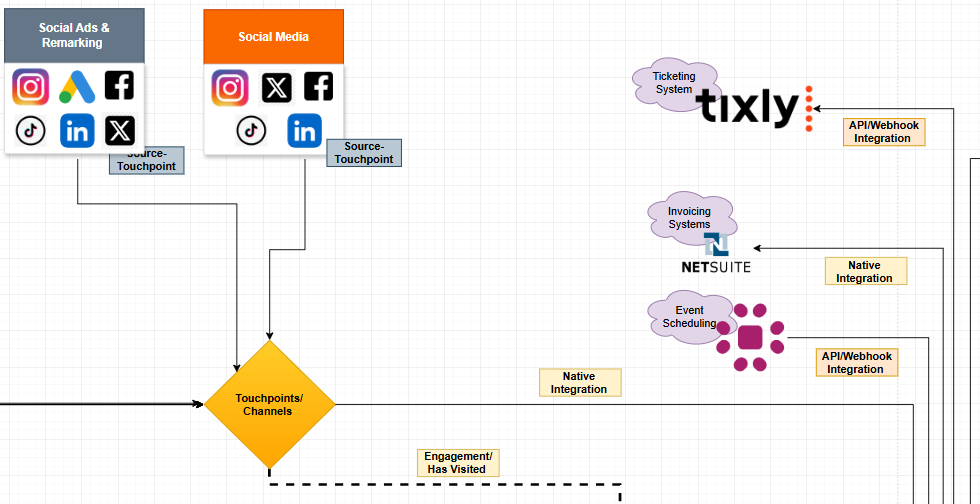
Through the CDHS layer, we built a QuickBooks integration that linked ticketing, CRM, and finance data in real time. Jotform submissions automatically created HubSpot deals, ticket sales synced nightly to QuickBooks, and all customer records lived under one contact record.

Measure & Mix
Every show and rental deal was tagged with a unique ID across systems, allowing CDHS to trace income, expenses, and project timelines with zero duplication. QuickBooks instantly recognized the correct account, while Monday.com generated production boards from HubSpot data.

Taste & Adjust
Governance rules handled validation and timing. If data was incomplete (like a missing invoice number or show ID) CDHS paused the sync, flagged the issue, and sent a Slack notification for review before pushing updates.
How It’s Served
Now, when a ticket sells or a rental request comes in, everything updates automatically.
Jotform creates or updates the corresponding record in HubSpot
HubSpot pushes validated deal, rental, or performance data into QuickBooks
QuickBooks updates financial dashboards in real time for leadership
Rental contracts auto-generate with pre-filled details from HubSpot
Monday.com production boards launch the moment a deal is marked Closed Won
Every workflow follows documented SOPs so the process stays consistent over time
The Review
Before
- Ticket sales, rentals, and finance updates lived in separate systems
- Staff spent fifteen to twenty hours each week transferring data by hand
- Accounting lagged behind ticketing reports with no real-time visibility
- Production schedules relied on spreadsheets and manual updates
- Each department worked from a different version of the truth
After
- Nearly twenty hours returned to the team every week
- Accuracy improved across financial, rental, and production workflows
- Real-time visibility into sales, rentals, and show profitability
- Accounting updates instantly reflect ticket revenue and rental activity
- Productivity increased by more than twenty five percent
- The theatre now focuses on performance, not data cleanup