




























How Multi-Attribution is Essential for Marketing Success
Introduction
As the marketing landscape continues to evolve rapidly, making it crucial for businesses to adopt strategies that accurately measure and optimize their marketing efforts. Multi-attribution has emerged as a key player in this arena, offering a comprehensive view of the customer journey.
We’ll explore why multi-attribution is essential for marketing success, especially for businesses leveraging platforms like HubSpot and embracing Revenue Operations (RevOps) methodologies.
The marketing landscape has undergone a seismic shift over the past few decades, evolving from traditional, linear models to a complex web of digital interactions. This transformation has necessitated a parallel evolution in marketing attribution – the art and science of assigning credit to the various marketing touchpoints a consumer encounters on their journey to a purchase. Understanding this evolution is crucial for marketers looking to navigate the intricate world of modern digital marketing effectively.
The Evolution of Marketing Attribution
In the early days of marketing, the journey from awareness to purchase was relatively straightforward. Marketers relied on single-touch attribution models due to the simplicity of the customer journey and the limited number of channels. The most common models were:
While these models provided some insights, they were overly simplistic for today’s complex customer journeys. They failed to consider the myriad of interactions a customer might have with a brand before purchasing.
The Rise of Digital Marketing and Its Challenges
The advent of digital marketing brought with it an explosion of channels and touchpoints. Customers now interact with brands through social media, emails, search engines, and more, often simultaneously. This complexity rendered single-touch attribution models inadequate, as they could not capture the multifaceted nature of modern customer journeys.
The Impact of Technology on Attribution Models
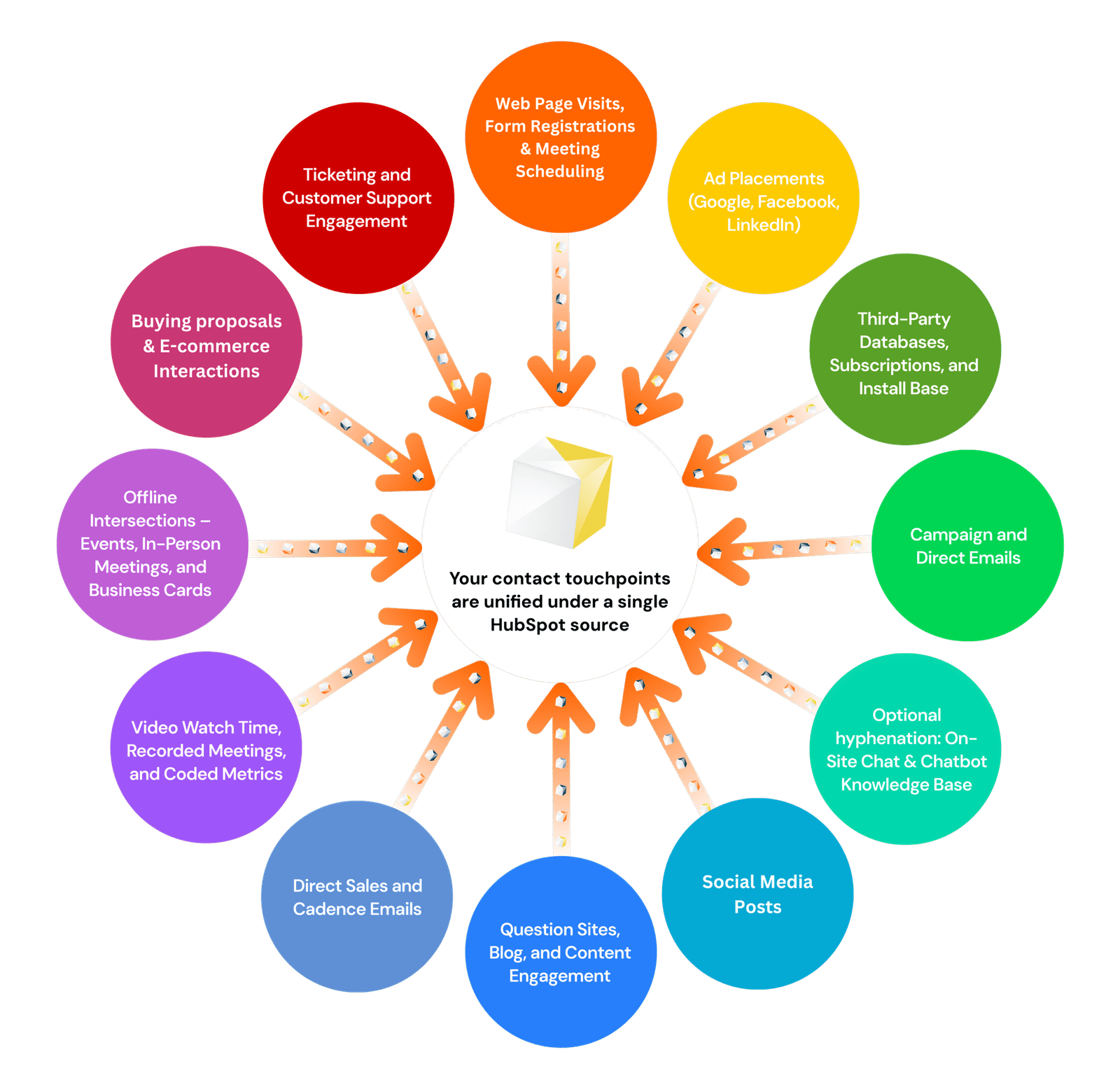
Advancements in technology have significantly enhanced the capabilities of multi-touch attribution models. Tools like HubSpot offer sophisticated analytics that track customer interactions across various channels, allowing marketers to build detailed attribution models. These tools can integrate data from social media, email campaigns, website visits, and more, providing a comprehensive view of the customer journey.

Challenges in Implementing Multi-Touch Attribution
Type of Multi-Touch Attribution Models
Multi-touch attribution models emerged to address this complexity. These models aim to distribute credit for conversion across multiple touchpoints, providing a more nuanced view of the customer journey. Some popular multi-touch attribution models include the Linear, Time-Decay, and U-shaped (Position-Based) Models, which we will explore and discuss later in this blog (see below).
The Role of AI and Machine Learning in Multi-Attribution
Artificial Intelligence (AI) and machine learning are increasingly significant in marketing attribution. These technologies can process large datasets, identify patterns, and provide predictive insights. AI-driven attribution models can dynamically allocate credit to different touchpoints based on their impact on customer behavior, offering a level of precision and adaptability that was previously unattainable. Explore the implementation and workflow of AI, including its crucial role in advanced marketing attribution models.
As we move further into the era of data-driven marketing, the ability to accurately measure and understand the impact of various marketing efforts becomes ever more critical. Multi-touch attribution models, powered by advanced analytics and AI, are essential tools for marketers seeking to navigate this landscape effectively. They provide the insights needed to optimize marketing strategies, allocate budgets efficiently, and drive business growth in an increasingly competitive market.
Understanding Multi-Attribution in Marketing
Defining Multi-Attribution in the Context of Modern Marketing
Understanding the customer journey from initial awareness to final purchase is crucial in digital marketing. This journey is rarely linear or confined to a single channel. Multi-attribution in marketing identifies and assigns value to each touchpoint that contributes to a customer’s decision to purchase or take a desired action. It’s a way to understand how marketing efforts collectively influence the customer’s journey.
Key Concepts in Multi-Attribution
Types of Multi-Attribution Models
Multi-attribution models vary in complexity and focus. Here are some of the most common types:
- Implementing Multi-Attribution Models:Multi-attribution in marketing is a critical tool for understanding modern customer journeys' complex, multi-faceted nature. By effectively implementing multi-attribution models, marketers can better understand how different channels and touchpoints contribute to conversions, enabling them to make more informed decisions about where to allocate their marketing resources. Implementing a multi-attribution model involves several steps:.
- Challenges in Multi-Attribution: As the digital landscape continues to evolve, the importance of multi-attribution in crafting effective, data-driven marketing strategies becomes increasingly paramount. However, while multi-attribution provides valuable insights, it comes with challenges:

- The Role of Technology in Multi-Attribution: Advancements in technology, particularly in areas like AI and machine learning, are making multi-attribution more accessible and accurate. Systems like HubSpot offer tools that automate data collection and integration, making it easier for marketers to implement and benefit from multi-attribution models. These technologies can analyze large datasets, identify trends, and provide predictive insights, enhancing the effectiveness of marketing strategies.
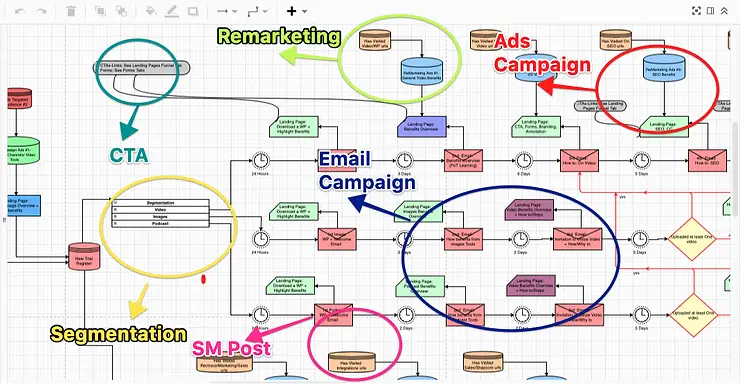
- Multi-Attribution and Customer Journey Mapping: Understanding the customer journey is integral to effective multi-attribution. Mapping out the customer journey helps marketers visualize the various touchpoints and how they interconnect. This visualization aids in selecting the most appropriate attribution model and identify areas where marketing efforts can be optimized. Explore the power of Customer Data Platforms (CDP) in building seamless customer journeys and closing gaps in your marketing strategy.
The Importance of Multi-Attribution for Today’s Marketing Strategies
Adapting to the Evolving Customer Journey
Enhancing ROI on Marketing Spend
One of the primary goals of any marketing strategy is to maximize the return on investment (ROI). Multi-attribution plays a crucial role in achieving this goal by providing a more accurate picture of what’s working and what’s not.
Integrating with RevOps and HubSpot
The role of multi-attribution in marketing is becoming increasingly vital. By providing a comprehensive view of the customer journey and enabling more strategic marketing, sales, and customer service decisions, multi-attribution models are essential for businesses aiming to maximize their marketing ROI and stay competitive in the digital age.
Integrating multi-attribution models with Revenue Operations (RevOps) and platforms like HubSpot is transforming how businesses approach marketing. Meet the experts to discover how HubSpot services can revolutionize your multi-attribution strategy.
Challenges and Solutions in Implementing Multi-Attribution
While multi-attribution offers numerous benefits, its implementation can be challenging, especially in the rapidly evolving digital landscape of 2024.
Preparing for the Future: Multi-Attribution in a Changing Landscape
Looking ahead, the importance of multi-attribution in marketing is set to increase further. Marketers must stay abreast of the latest trends and technologies to leverage these models effectively. Explore how unified platform implementation is a key driver for business efficiency, aligning with the future trends of multi-attribution in marketing.
Real-World Barriers to Multi-Attribution (and How to Overcome Them)

Data Complexity and Integration:
Challenge: One of the biggest challenges in implementing multi-attribution is managing and integrating data from various sources. Collecting and consolidating this data can be daunting, with customers interacting across multiple channels.
Solution: To tackle this, businesses can invest in advanced data integration tools and platforms like HubSpot, which offer robust data collection and analytics capabilities.
These tools can automate gathering data from different channels, ensuring accuracy and consistency. Additionally, training marketing teams on data management best practices can help in handling this complexity more effectively.

Challenge: With several multi-attribution models available, selecting the most appropriate one for a specific marketing strategy can be challenging. Each model has its strengths and weaknesses, and choosing incorrectly can lead to suboptimal marketing decisions.
Solution: Businesses should clearly define their marketing goals and understand their customer journey. This clarity can guide the selection of the most suitable attribution model. Experimentation and testing are also crucial – businesses can try different models and analyze their impact to determine which works best for their specific needs. Consulting with experts or agencies specializing in multi-attribution can also provide valuable insights. Choosing the best LMS technology is crucial for businesses defining marketing goals and optimizing customer journeys with multi-attribution models.

Challenge: Customer behaviors and preferences constantly evolve, especially in the digital realm. An attribution model that works today might not be as effective tomorrow, making it challenging to keep the models relevant and accurate.
Solution: To address this, businesses must adopt a flexible multi-attribution approach. Regularly reviewing and updating attribution models to reflect changes in customer behavior is essential. Leveraging AI and machine learning can also help, as these technologies can adapt to changing patterns and provide more dynamic attribution modeling. Staying informed about the latest trends in customer behavior and digital marketing can also help businesses anticipate changes and adjust their models accordingly.
THE FIVE STEPS GUIDE
Ensuring Effective Multichannel
Marketing in Your Company
Here, we outline a five-step guide to ensure that your company effectively implements and benefits from multichannel marketing. This approach involves engaging with customers through multiple online and offline channels to create a cohesive and integrated customer experience.
- 1st Step: Understanding Your Audience
- 2nd Step: Channel Selection and Integration
- 3rd Step: Creating a Cohesive Content Strategy
- 4th Step: Leveraging Data and Analytics
- 5th Step: Testing and Optimization
Implementing a successful multichannel marketing strategy requires a deep understanding of your audience, careful selection and integration of channels, a cohesive content strategy, data-driven decision-making, and continuous testing and optimization. If you have any questions or would like to adjust the process to your Organization’s requirements, please schedule a time with our expert. Click Here. Also check out this resource for a step-by-step guide to implementing automation platforms.
Subscribe to learn more !
Share:
More Posts