Blueprint your revenue system like an architect blueprints a house. See every platform, process, and handoff mapped visually.
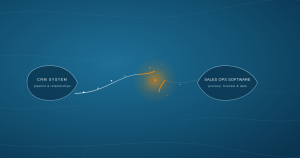
The Systems Automation Engagements (SAE) Map reveals how your business actually operates. Most companies can’t answer: “Where does data break between Marketing and Sales?” or “Why do Operations build the wrong thing?” SAE shows you the answer — every system, every workflow, every gap highlighted in one visual map.
System Automation Engagements (SAE)
Visualize how your systems truly connect, revealing where data flows, stalls, or gets lost between teams.
Stop losing deals in the handoff between Sales, Ops, and CS. QDF moves data and triggers actions between systems instantly.
Your sales team closes a deal. Finance doesn’t see it for 3 days. Operations builds the wrong thing. Customer Success never gets the handoff. Quick Data Flow (QDF) fixes this — data flows between systems in real-time, without custom code that breaks when platforms update.
Workflow Automation
Turn every manual process into motion — connect systems, trigger actions, and let automation carry your revenue forward.
When every system tells a different story, nobody can make confident decisions. CDHS unifies CRM, ERP, Finance, and Ops into one real-time data layer and Single Source of Truth.
Your CRM says one thing. ERP says another. Finance is running reports from spreadsheets. Nobody trusts the data. The Centralized Data Hub System (CDHS) is your Single Source of Truth (SSOT) — real-time sync across every platform, governed data, and one unified view that actually works.
CDHS: How it Works?
Bring your data together in one place. It’s built to sync in real-time, link, and deliver insights you can use tomorrow.
Automation Campaigns Creator (ACC) provides pre-built engagement workflow kits designed to address specific areas of revenue leakage. Each ACC KIT includes campaign architecture, automation sequences, and multi-channel touchpoints — ready to deploy without custom development.
Automation Campaigns Creator (ACC)
Transform your Customer Engagement Journey with ACCs’ KITs intuitive automation tools.
Capture Decisions, Assign Tasks, and Keep Work Moving Without Manual Follow-Ups
Teams leave meetings with good intentions, but follow-through breaks down. Notes scatter across Slack. Action items disappear into documents. TALK-to-TASKS closes the execution gap — turn meeting recordings into correctly routed tasks automatically.
How TALK-to-TASKS Works?
Routing conversations from meetings with two clicks into the right place to the right person on your Project Tool.
We onboard your team, document workflows, and ensure everyone knows how the system works.
We design and build QDFs that move data and trigger actions across your systems in real-time.
You need workflows that don’t break when platforms update. We implement Quick Data Flows using your SAE Map as the blueprint—connecting CRM, ERP, operations, and finance so every action flows automatically without custom code that breaks on the next update.
We define ownership, validation rules, and automated flow logic to keep your data clean as it scales.
We implement CDHS so every system, report, and decision runs from one source of truth.
When CRM, ERP, Finance, and Operations all tell different stories, nobody can make confident decisions. We build your Centralized Data Hub System using your SAE Map to define data ownership, flow rules, and governance—so you finally have one real-time view that everyone trusts.
We build, test, launch, and continuously optimize your campaigns for maximum conversion and engagement.
We design and deploy multi-channel engagement campaigns using ACC templates—customized for your customer journey.
Generic email sequences don’t work. We build Automation Campaign Creator (ACC) workflows tailored to your specific revenue leakage points—combining email, SMS, in-app, and sales triggers across HubSpot, Klaviyo, and your CRM to drive engagement that converts.
Your new tools integrate smoothly, align with your workflows, and start delivering value from day one.
We don't just connect systems, we make them work in harmony. Fruition designs, builds, and implements integrations that keep your operations flowing without friction.
Most integrations are duct-taped APIs that break when platforms update. We design integration architecture for the long term—selecting the optimal path through native connectors, APIs, N8N, or iPaaS like Make or Workato.
15-minute conversation that reveals where your revenue system breaks — gaps, silos, missed handoffs mapped visually.
Most companies can’t answer basic questions: “Where does our sales data break?” “Why doesn’t Operations know what Marketing promised?” The SAE Diagnostic reveals your answer in 15 minutes — a visual map showing exactly where systems disconnect, data gets lost, and revenue leaks.
Centralize scattered data and replace confusion with clarity, ensuring every department works from one truth of data and build your single source of truth (SSOT).
We don't just document; we drive adoption. Teams learn how to follow, improve, and trust the process, turning SOPs into muscle memory.
Transform tribal knowledge into repeatable workflows, giving your teams the structure to scale with clarity and consistency.
Automation breaks and centralization stalls when teams work from memory instead of process. We map how work truly gets done — turning SOPs into muscle memory, not shelfware.
We don't just hand over systems — we onboard your team, train them to use tools confidently, and ensure adoption sticks.
New systems fail when teams don’t adopt them. We train, enable, and support your team through the transition. As Gold Partners with HubSpot, Monday.com, and Segment, we know how to make systems work for your people.
From HubSpot and NetSuite to Monday.com and Shipwell, we integrate and orchestrate your tech ecosystem into one coordinated revenue engine.
Strategic advisory for revenue operations — system architecture, automation strategy, data governance, and team enablement.
RevOps isn’t just about connecting systems — it’s about aligning strategy, data, and execution. Our consultants bring two decades of experience building revenue engines for $50M-$500M companies.
Fruition RevOps’ proven framework turns disconnected systems into synchronized revenue engines. Each stage reveals where your data, workflows, and teams fall out of sync, and rebuilds them into one intelligent flow that drives efficiency, visibility, and growth.
Four stages that guarantee smooth process alignment
Map how your business actually operates across teams, capturing the customer journey, decision points, system roles, data handoffs, and revenue flow. This blueprint surfaces inefficiencies and defines what must be automated versus redesigned.
Translate the SAE blueprint into a concrete data flow and automation model — defining system ownership, data attributes, relationships, and trigger logic. This prepares your foundation before building QDFs.
Implement the Centralized Data Hub System as the governance layer connecting all systems and QDFs. CDHS enforces data ownership, flow rules, and establishes a single source of truth — ensuring automation stays stable as you scale.
Deploy targeted Quick Data Flows that move data and trigger actions across systems in real time. Each QDF handles a specific business event — deal progression, order creation, production updates, billing changes — without manual intervention.
Real integrations built through QDF and CDHS implementations—each designed from a client’s SAE Map to solve specific data flow and automation challenges.
Find where your revenue is breaking — every engagement starts here. We map your systems, identify leakage points, and show you exactly what to fix first.
Real integrations built through QDF and CDHS implementations—each designed from a client’s SAE Map to solve specific data flow and automation challenges.
Discover how a centralized data platform can help your team unlock insights, reduce costs, and deliver better client experiences.
In an increasingly data-driven world, effectively managing and analyzing data is a critical success factor for businesses of all sizes. This task becomes even more complex for enterprise companies due to the vast volumes of data generated across multiple departments and systems. A centralized data platform can help organizations overcome these challenges by streamlining their data management processes, improving decision-making, and driving meaningful engagement with clients
In this comprehensive guide, we’ll explore why your company should centralize its data, the benefits of adopting a unified platform, and the steps to successfully implement such a system.
What Happens When You Centralize Your Data?
Streamlined Data Management
Having data scattered across multiple systems can make it difficult for organizations to access, analyze, and manage that information effectively. Centralizing data into a single platform eliminates this issue, simplifying data management and ensuring a single source of truth for all your business data.
Cost Savings
By streamlining your data management processes, centralizing data can help your organization save time and resources, ultimately reducing costs. This is particularly important for enterprise companies, where even small efficiency improvements can lead to significant cost savings.
Enhanced Collaboration
When data is centralized, teams across your organization can easily access and share information, fostering collaboration and enabling faster decision-making. This is particularly important for Heads of IT and executives who need to make strategic decisions based on accurate and up-to-date data.
Improved Data Quality
Data quality is crucial for any organization, as poor data can lead to incorrect insights and hinder decision-making. By centralizing your data, you can implement consistent data quality processes and minimize the risk of errors, ensuring that your organization’s data is accurate, complete, and reliable.
Advanced Analytics
A unified data platform allows organizations to leverage advanced analytics tools and techniques, such as machine learning and artificial intelligence. These technologies can help you uncover hidden patterns, trends, and insights within your data, leading to more informed decisions and better business outcomes.
Scalability
As your organization grows, so does the volume of data you generate. A centralized platform is easier to scale, ensuring that your data management processes can keep up with the growing demands of your business.
Compliance and Security
Centralizing data enables organizations to implement consistent security and compliance measures, protecting sensitive information and ensuring that your company meets industry and regulatory requirements.
Process Automation
A unified data platform allows organizations to automate repetitive tasks, reducing manual work and improving efficiency. This process automation frees up your team’s time to focus on more strategic initiatives, driving growth and enhancing client engagement.
Real-time Insights
With data centralized and easily accessible, your organization can generate real-time insights and make data-driven decisions more quickly. This agility is particularly important in today’s fast-paced business environment, where organizations must constantly adapt to stay competitive.
Enhanced Customer Experience
By centralizing data, you can gain a comprehensive view of your clients, allowing you to understand their needs and preferences better. This knowledge can help you personalize your interactions and deliver more relevant, engaging experiences, ultimately leading to stronger client relationships and loyalty.
Data-driven Decision-making
A unified data platform empowers your organization to make data-driven decisions, enabling you to identify new opportunities, optimize operations, and drive growth. This is particularly important for Heads of IT and executives who need to make strategic decisions based on accurate and up-to-date data.
Train with the best
Nine Steps To Implementing A Unified Data Platform
Define Your Goals and Objectives
Before implementing a unified data platform, clearly defining your goals and objectives is essential. Consider what you want to achieve by centralizing your data and how it aligns with your organization’s overall business strategy. A clear vision of the desired outcomes will help guide your implementation process and ensure success.
1
Choose the Right Platform
Selecting the right data platform for your organization is crucial in the implementation process. Consider factors such as ease of use, scalability, and compatibility with your existing systems when evaluating your options. It’s also essential to choose a platform that supports advanced analytics and automation capabilities, as these features can help you maximize the value of your centralized data.
2
Develop an Implementation Plan
Once you have selected a platform, develop a comprehensive implementation plan that outlines the steps and resources required to centralize your data. This plan should include milestones, timelines, and the allocation of responsibilities to ensure a smooth and efficient implementation process.
3
Allocate Resources and Assemble a Team
Assemble a cross-functional team to oversee the implementation of your unified data platform. This team should include representatives from IT, data management, analytics, and other relevant departments. Ensure that you allocate sufficient resources to support the team throughout the implementation process.
4
Migrate and Integrate Data
Data migration and integration are critical components of implementing a unified data platform. This process involves consolidating data from multiple systems, ensuring data quality, and establishing connections between your new platform and existing tools. Be sure to develop a detailed data migration plan and allocate sufficient resources to ensure a smooth and efficient process.
5
Implement Data Governance and Security Measures
With your data centralized, it’s essential to implement robust data governance and security measures to protect sensitive information and ensure compliance with industry and regulatory requirements. Develop clear policies and guidelines for data access, storage, and usage, and provide training to your team to ensure that these measures are consistently applied.
6
Train Your Team
To maximize the benefits of your centralized data platform, your team must know how to use the system effectively. Provide comprehensive training on the platform’s features, analytics tools, and automation capabilities, and offer ongoing support to ensure your team can make the most of your new system.
7
Monitor and Optimize
Once your unified data platform is up and running, continuously monitor its performance to ensure that it’s delivering the desired results. Gather feedback from your team, analyze the data, and make any necessary adjustments to optimize the system for maximum efficiency and effectiveness.
8
Scale and Expand
As your organization grows and your data management needs evolve, consider scaling your centralized platform to accommodate additional data sources and capabilities. This expansion will help you continue to unlock the full potential of your data and drive business growth.