



























Retail Workflow Automation for Growing Companies
When your inventory, sales channels, and customer data move in sync, retail operations stop being reactive — and your workflow automation starts driving consistent, scalable growth.
Retail workflow automation starts with understanding how your systems actually connect. When they don’t, even small gaps in data flow lead to big consequences across the customer experience
Every customer touchpoint generates data — from in-store purchases and online orders to returns, loyalty programs, and marketing interactions. When this information lives in separate tools, teams spend time reconciling numbers instead of serving customers. Promotions launch without real-time inventory visibility. Online and in-store data tell different stories. Fulfillment slows down, and customer trust erodes.
The root cause is rarely a single broken tool. It’s the space between your tools — where handoffs stall, data drifts, and teams are forced to fill the gaps manually. What you need isn’t another platform. You need a clear blueprint that shows exactly how information moves across your retail operation.
This is what the Let Data Flow Framework delivers — designed and adapted specifically for retail.
- Challenges in Retail
Workflow Problems Unique to Retail Operations
Retail businesses face pressure from every direction — customer expectations, channel complexity, and inventory precision. These are the breakdowns that quietly drain performance.
Disconnected Sales Channels
When your e-commerce platform, POS system, and marketplace channels don’t share data, customer experiences become inconsistent and reporting becomes unreliable.
Inventory That Doesn't Match Reality
Without real-time stock sync across locations and channels, teams oversell, undersell, or make fulfillment promises they can’t keep.
Fragmented Customer Data
Loyalty programs, CRM records, email lists, and support tickets live in separate tools — making it hard to personalize outreach or measure lifetime value.
Slow Fulfillment and Order Handoffs
When orders require manual steps between departments — payment to warehouse to shipping — bottlenecks stack up. Customers notice when fulfillment lags.
Promotions Without Visibility
Campaigns launch without accurate inventory data, real-time margin insight, or coordinated channel execution. Teams can’t measure what worked.
Workflows That Can't Keep Up with Growth
As you add channels, locations, or product lines, legacy systems and manual workflows buckle under the weight of omnichannel retail.
See exactly where your retail data flow breaks —
and what to fix first.
The Let Data Flow Framework
A Customized Approach to Retail Workflow Automation
Our four-stage framework maps, optimizes, and scales your retail workflow automation — so every channel, team, and system moves together.
Your Retail Blueprint for Engagement and Scale
The first step in the Let Data Flow Framework is creating your System Automation Engagement (SAE) Map, a practical, real-world view of how information, tasks, and customer interactions currently move across your retail operation. This means mapping how your POS, e-commerce platform, inventory management, CRM, and marketing tools interact, and where handoffs between them break or stall. The SAE Map eliminates guesswork, giving you clarity, alignment, and a shared path forward so every improvement and automation decision is grounded in truth.
Map Your Retail Data and Automation Attributes
Once the SAE Map is complete, we translate your blueprint into a concrete data flow and automation model. For retail, this means defining exactly which system owns each data point, from SKU and inventory levels to customer records and order status, how data relationships are structured across your channels, and what trigger logic fires each automation. This is where abstract understanding becomes engineering-ready architecture. Without it, automations get built on assumptions, and automation built on assumptions breaks. With it, every workflow has a documented source of truth and triggers that fire on real data events, not guesswork.
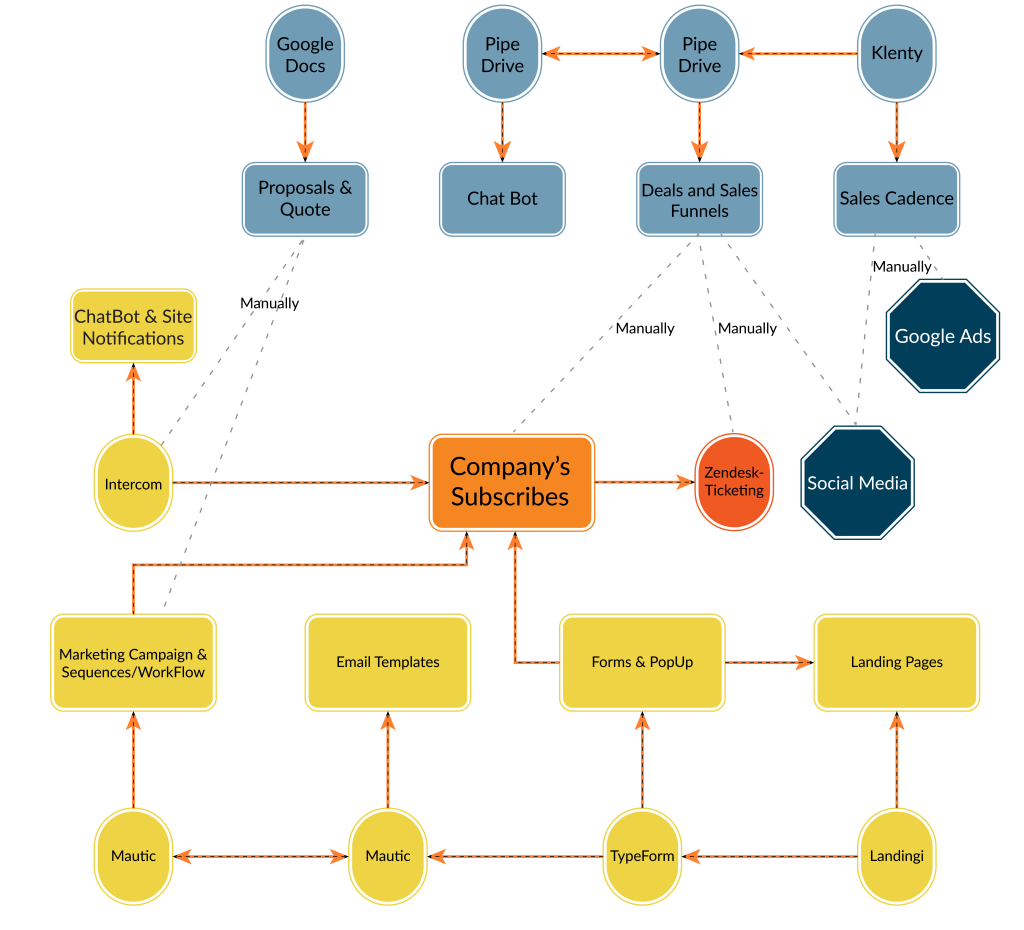
Where Retail Data Becomes Unified and Scale Becomes Inevitable
The third stage brings everything together into a single unified source of truth. Once your retail systems are mapped and data attributes defined, we centralize the data logic across your tools so every team operates from the same reality. Centralization does not replace your Shopify, HubSpot, NetSuite, or ERP platforms. It governs them. A centralized backbone ensures that inventory levels, customer records, order data, and financial reporting move cleanly, consistently, and in the right order. Leaders do not guess. Teams do not duplicate work. Results do not conflict.
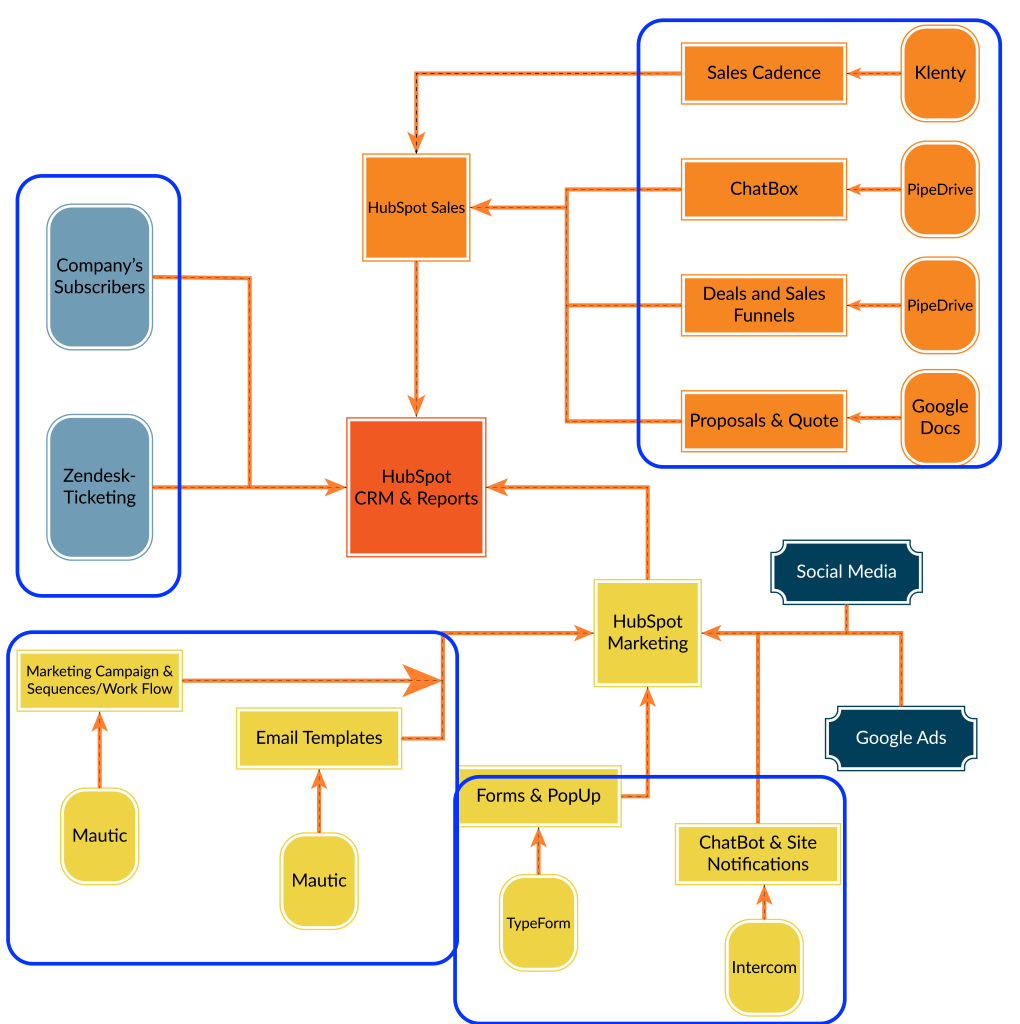
Turn Repetitive Retail Work Into Automatic Flow
With clarity and visibility established, the fourth stage is about turning your blueprint into motion. We connect your systems and automate the workflows that remove manual effort, reduce errors, and keep momentum moving forward. Each Quick Data Flow handles a specific retail business event, from order creation and inventory updates to fulfillment handoffs and post-purchase sequences, without manual intervention. Handoffs trigger automatically and key actions never depend on memory or manual steps.
Productivity Increase
0
%
SKU Traceability
0
%
Double Data Entry
0
Single Source of Truth
0
Centralized Data Hub System
You Need the CDHS If…
The Centralized Data Hub System (CDHS) is a layer within the Let Data Flow Framework for retail companies with complex, multi-channel operations. The CDHS connects your e-commerce, POS, inventory, CRM, marketing, finance, and fulfillment platforms into one governed system.
Multi-Channel
You sell across e-commerce, brick-and-mortar, and marketplace channels that need unified data.
Multi-Location
Operating across multiple stores, warehouses, or regions requires consistent, real-time inventory visibility.
Vendors & Suppliers
Real-time vendor data impacts purchasing decisions, reorder timing, and supply chain reliability.
Leadership Visibility
Decision-makers need one trusted dashboard — not five conflicting reports — to act with confidence.
Scaling Fast
Adding new channels, locations, or product lines without breaking processes requires centralized governance.
Why Retail Companies Choose Fruition
Retail Workflow Automation Built for How You Actually Work
By combining deep retail operations understanding with a proven integration framework, we help teams work smarter, sell faster, and deliver more for their customers.
Automated Workflows That Fit Your Retail Stack
We design integrations and workflows around the way your teams already work — your POS, your e-commerce platform, your fulfillment tools. Disruption stays low and adoption stays high.
Proven Operational Gains
Our clients achieve measurable improvements — up to 30% productivity boosts, full SKU traceability, elimination of manual reconciliation, and faster fulfillment cycles.
Omnichannel Expertise
We understand the operational challenges of selling across e-commerce, physical locations, marketplaces, and social channels — and how to make them work as one connected system.
Future-Proof Scalability
Systems that grow with your retail business. Add locations, channels, or product lines without breaking the operational foundation you’ve already built.
There are many software integrators out there, but if you are a serious company looking to get critically thought-out work done fast, Fruition RevOps is the team you should talk to. They will continue to play a big role in our company as we continue to build out our systems.
Ready to Automate Your Retail Workflows?
Your customers expect seamless experiences across every channel. Don’t let disconnected systems or manual processes hold you back. Start with the map — and build from there.
Free consultation · No commitment · See your systems clearly