

























Inside the Kitchen
Top Funnel Revenue Leakage
When the Ads Work and the Site Doesn't
A B2B SaaS company was spending real money on Google Ads and getting almost nothing back. Fruition RevOps diagnosed the funnel, rebuilt the targeting, and wired up a governed data layer through CDHS. Registrations went up 10x on the same budget.
The Ingredients
Systems and platforms in this revenue leakage diagnosis
Marketing automation, form tracking, and lead capture
Paid search campaigns driving top-funnel traffic
Central governance layer for contact data and conversion tracking
Automated contact routing and funnel signal processing
The Mess in the Kitchen
A B2B SaaS company selling workflow automation tools came to Fruition RevOps with a straightforward complaint: their Google Ads campaigns were spending real money and producing almost nothing. One to two registrations a day. Acquisition costs that made no sense for their deal size.
The problem looked like an ad problem. It wasn’t. The ads were getting clicks. The landing pages were bleeding them out. There was revenue leakage at the top funnel, and no one had instrumented the funnel well enough to see it.
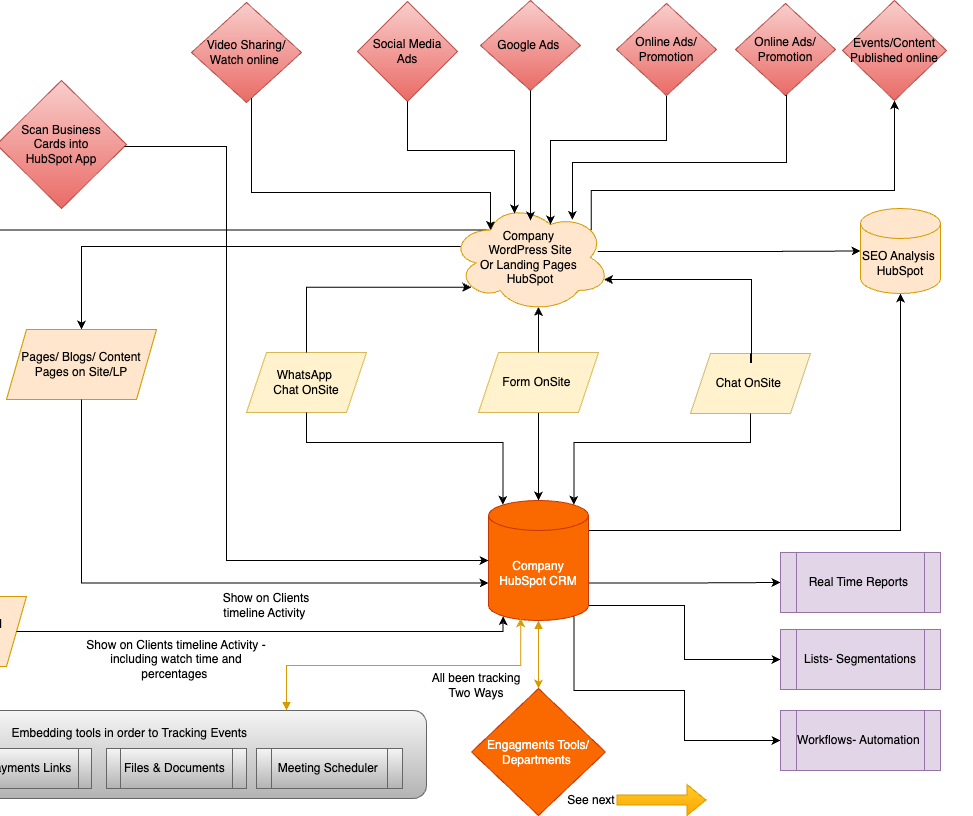
Their HubSpot instance tracked form fills but nothing upstream. Impression-to-click data lived in Google Ads. Click-to-conversion data lived in HubSpot. The gap between those two systems was invisible — and that gap was where the money was disappearing.
There was no lifecycle governance. Contacts entered HubSpot with no stage, no source tag, no routing logic. The sales team had no visibility into which leads came from paid search versus organic, so nothing was being prioritized. Data that should have been flowing was sitting in disconnected silos.
What They Wanted to Serve
They wanted registrations. More of them, at a lower cost, from the same ad spend. Specifically, they needed to understand whether the problem was the targeting, the creative, or the conversion experience on-site — and they needed that answer fast because the budget clock was running.
THE GOAL
Full visibility from ad impression to registration, with a governed data layer that would catch conversion drops before they became budget disasters. Every dollar of ad spend should be traceable to a contact, a source, and a funnel outcome.
They also needed the fix to be durable. Not a one-time audit, but a system that would surface conversion gaps automatically — so ad spend decisions were always grounded in real data, not guesswork.
Our Recipe
We started where the data was cleanest: the ads. Then we built a governed data layer through CDHS that connected ad performance to contact behavior for the first time. The result was a complete picture of where revenue leakage was occurring and which lever to pull first.
Phase 1: Google Ads Diagnosis and Rebuild
The first step was a full keyword audit. The campaigns were targeting broad, high-competition terms that attracted clicks from audiences well outside their ICP. We rebuilt the keyword strategy around specific, intent-rich terms tied to workflow automation pain points their buyers actually search.
Ad copy got rebuilt next. The existing ads described features. We rewrote them around outcomes — what the buyer’s week looks like after the problem is solved. Click-through rates improved within the first two weeks of the new creative running.
Quick Data Flow #1
Paid Search Lead Intake
Every contact entering HubSpot from a Google Ads click gets processed through this QDF on entry. No manual steps, no delayed routing.
- UTM parameters captured and written to permanent contact properties at point of form fill
- Source classification applied automatically: paid search, branded, non-branded, competitor
- Contact checked against existing records — existing customers and active opportunities suppressed from new prospect sequences
- ICP-fit score calculated on entry based on company size, industry, and behavioral signals
- High-fit contacts routed directly to sales queue in HubSpot with urgency flag
- All others enrolled in nurture track with appropriate lifecycle stage applied
Phase 2: CDHS Governance Layer
CDHS sits between the ad platform and HubSpot, ensuring every contact entering the funnel carries complete, accurate attribution data. This is what makes revenue leakage visible — when conversion rates drop, the data layer shows exactly where in the funnel the drop is happening and what changed.
1. Attribution Governance
Every contact is stamped with original source, campaign, ad group, and keyword at the moment of entry. These properties are write-once — no downstream automation can overwrite them. Attribution stays clean for the life of the contact.
2. Conversion Signal Monitoring
CDHS tracks impression-to-click ratios from Google Ads alongside click-to-registration ratios from HubSpot. When those two numbers diverge — clicks up, registrations flat — it flags a conversion gap at the site layer. That distinction is worth knowing before anyone touches a budget.
3. Lifecycle Stage Enforcement
No contact moves through the funnel without a valid lifecycle stage. CDHS enforces stage transitions — a contact can’t skip from Lead to Opportunity without passing through MQL and SQL gates. This keeps reporting clean and prevents inflated pipeline numbers.
4. QDF Enrollment Logic
Contact classification on entry determines which QDF runs. Net-new ICP-fit contacts go one way. Returning visitors, existing customers, and partner contacts each route differently — automatically, without anyone touching a list.
Why This Matters
Most revenue leakage at the top funnel is invisible because the data lives in two systems with no governed connection. Ads platforms see clicks. CRMs see contacts. Nobody sees what happens between them. CDHS closes that gap. Sealing revenue leakage starts with being able to see it.
The Results
After the Google Ads rebuild and CDHS integration went live, daily registrations jumped from 1–2 to an average of 13.8. A tenfold increase. Acquisition cost dropped to $1.05 per registration. The keyword strategy and ad copy changes drove better qualified clicks. The QDF routing meant those clicks turned into properly attributed, lifecycle-governed contacts in HubSpot instead of noise.
Average daily registrations after Google Ads rebuild
0
Cost per registration, down from industry-high baseline
$
0
Increase in registration volume on same ad spend
0
X
How It's Served
The build ran in two parallel tracks. Ad optimization started immediately while the CDHS architecture was being wired up. Both went live within the same window.
Audit
Full keyword audit, ad copy review, landing page CTA mapping, HubSpot form and source tracking audit
Week 1
Ads Rebuild
New keyword strategy, rewritten ad creative, negative keyword list, bid adjustments by device and time
Week 2
CDHS Build
Attribution properties, lifecycle stage enforcement, conversion signal monitoring, QDF enrollment logic
Weeks 2–3 (parallel)
QDF #1 Live
Paid search lead intake QDF production launch — UTM capture, source classification, ICP scoring, routing live
Week 3
Stabilize
Two-week monitoring window, scoring calibration, bid refinement, HubSpot workflow QA
Weeks 4–5
The Constraint That Defined Everything
The entire system was designed around one principle: no revenue leakage should be able to happen silently. Every conversion gap had to be detectable from the data. If registrations dropped, CDHS would show whether clicks had also dropped (an ad problem) or whether clicks were steady while registrations fell (a site problem).
The Review
Before
1–2 registrations per day from Google Ads campaigns
Acquisition cost far above sustainable unit economics
No visibility into where in the funnel clicks were dropping off
HubSpot contacts had no source attribution, no lifecycle stage
Revenue leakage at the top funnel invisible to every team involved
After
13.8 average daily registrations — same budget, 10x output
$1.05 cost per registration after keyword and creative rebuild
Every contact enters HubSpot with source, campaign, and lifecycle stage
CDHS connects ad performance to contact behavior in real time
QDF routes, scores, and classifies every paid search contact automatically
Find Out Where Your Ad Budget Is Going to Die
Most top-funnel leakage is detectable in under an hour. Fill out the form and let’s look at your funnel together.